


I enjoy note-taking apps most when they disappear into the background and let me concentrate on the lecture, document, or idea in front of me. Notability: AI Note Workspace aims for that role by bringing handwriting, typed notes, recordings, PDF markup, and study organization into one productivity app. After spending time with it, I see a capable workspace for students and people who work heavily with documents, although it is not automatically the best choice for anyone who only wants a simple digital notebook.
What makes this app interesting is the way it treats a note as more than a blank page. A class session can become a combination of written notes, audio, imported reading material, and later review. That approach feels much closer to how people actually study than a basic text editor does. At the same time, the broader feature set means there is more to learn, more to organize, and more reason to think about whether the paid additions fit your routine.
How Notability feels in its current form
Notability is a free productivity app from Ginger Labs, with an Everyone content rating and a current version of 1.1.3. Its presence is already substantial, with over one million installs and an average score of 4.0 from around one thousand nine hundred ratings. Those figures suggest a product with a real user base, but they also tell me to keep expectations measured: this is a mature kind of tool, not a magical replacement for every writing, planning, and document app.
The first useful distinction is between using it as a notebook and using it as a study workspace. As a notebook, it can handle quick writing, structured pages, and visual annotation. As a workspace, it becomes more valuable when a single project contains several kinds of material. I can imagine opening a course note, writing beside a diagram, marking a PDF, and returning later to the same material instead of scattering everything across separate apps.
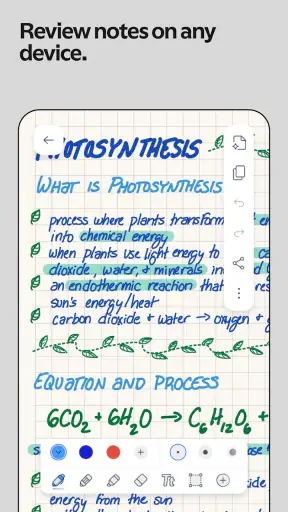
The interface makes the most sense for people who are comfortable with a pen or stylus, though typed notes remain important. Handwriting is not merely decoration here. It is useful for formulas, arrows, rough diagrams, margin comments, and the kind of shorthand that is awkward to create with a keyboard. The trade-off is that neat organization depends on the habits you build. A digital notebook can quickly become just as messy as a paper one if every page becomes a dumping ground.
One of my favorite practical uses is preparing before a class rather than only recording it. I can place the reading or worksheet into a note, add a short outline at the beginning, and reserve room for questions. During the session, the page becomes a live working document. Afterward, the same file is ready for cleanup and revision. That continuity is more useful than simply having a large collection of disconnected pages.
Recording and reviewing a real study session
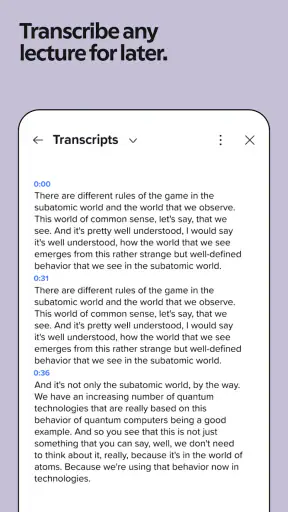
The recording capability changes how I would use the app during a lecture or meeting. Instead of trying to write every sentence, I can capture the main structure: headings, definitions, examples, and questions. The recording then acts as a safety net for details I missed. This is a better workflow than typing a rushed transcript of everything, because the notes remain readable and emphasize what I considered important.
There is an important behavioral catch, though. Recording can encourage passive note-taking. If I rely on the audio too much, I may leave the session with a long file and very little understanding. I get better results when I pause briefly to summarize a point in my own words, then use the recording later to check a detail. The app supports that kind of review, but it cannot create the study discipline itself.
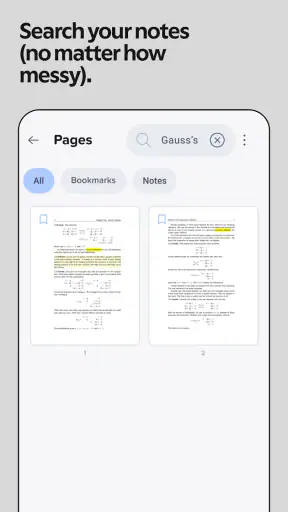
A helpful technique is to separate the original class notes from the later revision page. I keep the first page messy and fast, then create a cleaner summary with the key terms, examples, and unresolved questions. This preserves the context of the session without forcing me to turn hurried handwriting into a polished document immediately. It also makes the notebook easier to search visually when an exam is approaching.
PDF annotation that is useful beyond simple highlighting
PDF markup is another area where the app earns its place. Highlighting alone is easy to find elsewhere, but the real advantage comes from placing handwritten explanations, circles, arrows, and questions directly beside the source material. For academic reading, that means the argument and my response to it stay together. I do not have to switch between a document viewer and a separate notebook every few minutes.
I found the margin workflow especially valuable for difficult reading. Rather than highlighting every sentence, I can mark only the claim, write a short challenge beside it, and add a question where the author moves too quickly. Later, those annotations become a ready-made revision guide. This is more effective than coloring a page heavily and then discovering that nothing stands out anymore.
The limitation is that document annotation is not the same as full document management. If my priority is advanced file conversion, collaborative editing, or a highly specialized PDF workflow, I would look at a dedicated PDF tool instead. Notability is strongest when the PDF is part of a personal learning system, not when I need a complete office document pipeline.
Organization choices that prevent notebook overload
The app rewards a simple structure. I would create broad subjects or projects first, then use consistent page names and visual markers rather than making a separate container for every small topic. For example, one course can hold lecture notes, reading annotations, review pages, and assignment planning. That keeps related material together while avoiding a maze of tiny folders.
A less obvious but useful habit is to end each session with a small “next action” note. I might write “check the definition,” “find another example,” or “ask about the second diagram.” This turns the notebook into an active study queue. Without that step, recorded lectures and annotated PDFs can become archives that I rarely revisit.
I also prefer keeping source material and personal interpretation visually distinct. A different ink color, a narrow margin area, or a separate summary page can do the job. The point is not aesthetic perfection; it is being able to tell later what came from the document and what came from me. That distinction matters when reviewing for accuracy.
What has changed, who benefits, and what still needs attention
The app’s current identity is shaped by its all-in-one approach and its AI Note Workspace positioning. I would treat that as an evolution toward a broader productivity environment rather than as proof that every task has become automatic. The practical improvement is the combination of study materials in one place. The expectation I would keep in check is that an AI-oriented workspace will remove the need to read, organize, and verify information myself.
For an existing user, the move toward a more unified workspace can be convenient if your notes already include several formats. A lecture note can sit alongside a marked reading and a follow-up summary, so the value grows with the amount of connected material you keep. On the other hand, someone who has built a careful system around plain notebooks may find the wider feature set unnecessary. More capability is not always more speed.
The free entry point makes it easy to test the basic workflow before committing. The app is listed as free, while optional in-app purchases range from $2.49 to $99.99 per item. That wide range is a reason to inspect the purchase screen carefully and decide what you actually need. I would begin with one complete project—such as a week of lectures or a single research packet—rather than paying immediately based on the feature list.
That trial should answer several practical questions. Do I enjoy writing on the device for a full session? Can I find an old page quickly? Does combining audio and written notes genuinely improve review? Do PDF annotations remain comfortable when a document becomes long? These answers matter more than the download itself, because the app’s usefulness depends on repeated habits rather than a one-time setup.
Students are the clearest audience. The app suits people who move between lectures, readings, diagrams, and revision. It can also work well for researchers who annotate papers, professionals who review visual documents, and anyone who prefers handwritten planning but wants digital storage. People who think spatially will probably get more from it than users who want a strictly linear text editor.
I would be more cautious if you mainly need a lightweight checklist, a fast text scratchpad, or a shared team document. A plain notes app is quicker for a grocery list, and a collaborative office platform is usually a better fit when several people must edit the same document at once. Notability’s strength is personal, rich-media work. Its extra tools can feel like friction when the task is deliberately simple.
There are also workflow limitations to consider before making it your only system. A notebook that contains recordings, imported documents, handwritten pages, and typed summaries can become large and difficult to maintain. I would establish naming rules from the first day and periodically archive finished projects. Otherwise, the convenience of keeping everything together may turn into a search problem later.
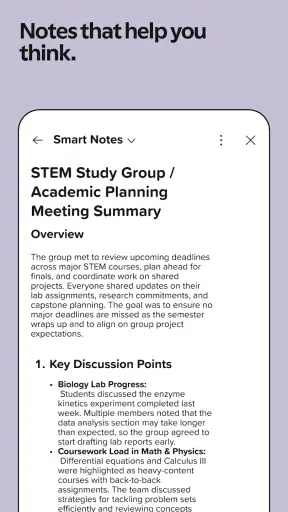
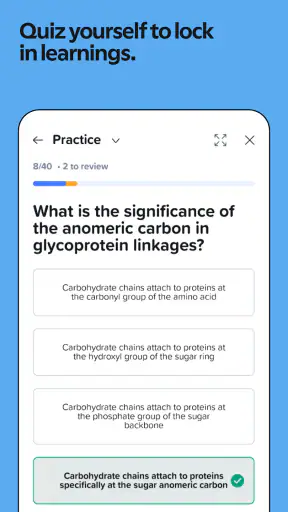
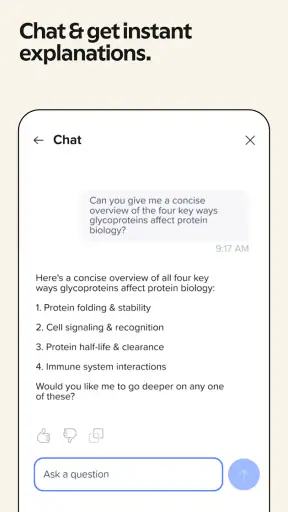
Another gap is the difference between capturing information and understanding it. The app can help me collect evidence, mark a passage, and revisit a lecture, but I still need to decide what matters. I would not use any automated assistance as a final authority for technical definitions, calculations, or quotations. The safest workflow is to treat generated or suggested material as a starting point, then compare it with the original page or recording.
Privacy and storage habits deserve ordinary common sense as well. I would avoid treating a general-purpose note workspace as the sole home for sensitive records without checking the settings and account behavior myself. For schoolwork and normal planning, that may not be a concern. For confidential professional material, the decision should depend on the organization’s requirements rather than on convenience alone.
The version and release information give the product a clear current snapshot: it was released on July 28, 2026, and the present version is 1.1.3. I see that as a point in the product’s development, not a promise about what will arrive next. When future updates appear, I would watch whether they make navigation faster, clarify how AI-assisted work is presented, and improve the transition from captured notes to finished understanding.
I would also watch how the paid model develops. A free starting tier is useful because it lowers the barrier to testing, but the practical value depends on whether the features I use every week remain comfortable without unexpected restrictions. The sensible approach is to judge the app by a complete recurring workflow, not by a single impressive tool used once.
After using it as a combined notebook, recorder, and PDF workspace, I would recommend Notability to a friend who studies from mixed materials and likes to write by hand. I would especially suggest trying it for one real course or document-heavy project, with a clear folder structure and a separate review page for each session. That is where its design feels most coherent.
I would not recommend it automatically to someone who wants the smallest possible note-taking app, a fully collaborative editor, or a specialized PDF production tool. Those users may be happier with a simpler or more focused alternative. For everyone else, the main question is whether the all-in-one design reduces switching enough to justify learning another workspace.
My overall impression is positive but practical. Notability is at its best when it turns scattered study actions into one repeatable review routine, not when it is treated as a digital drawer for everything. Ginger Labs has built an appealing productivity app for connected notes, recordings, and annotated documents. Just keep the structure simple, verify important information yourself, and test the free experience before deciding whether the optional purchases belong in your workflow.


